



Short Answer: Yes, a copper pillowcase works, but with important nuances.
Multiple peer-reviewed, double-blind clinical trials published in dermatology journals confirm that copper-infused pillowcases can significantly reduce facial wrinkles and fine lines. Separately, copper-infused fabrics have been proven to improve skin elasticity and copper's antimicrobial properties are well-established in medical literature.
But also, some caveats: not all copper pillowcases are made equally, the composition of the fabric matters, and results take consistent nightly use over several weeks. Here's the full picture.
Last updated: May 2026 | Reading time: ~10 minutes
This article cites peer-reviewed research published in indexed medical and scientific journals. Where studies have limitations, including sample size, funding source, or scope, we note them honestly. All citations are linked at the end.
The Short Answer: Yes, Copper Pillowcases Have Benefits
A copper pillowcase can genuinely benefit your skin and hair, but there are 2 important details: 1. Only if it is made the right way, and 2. How you sleep on it matters.
The science behind copper's role in collagen production and its antimicrobial properties is solid and spans decades of biomedical research. Several double-blind, placebo-controlled clinical trials have specifically tested copper-infused pillowcases and found statistically significant improvements in skin appearance (see below). And the friction-reducing properties of silk, which amplify those benefits, are independently supported by textile research (again, see detail below in this article).
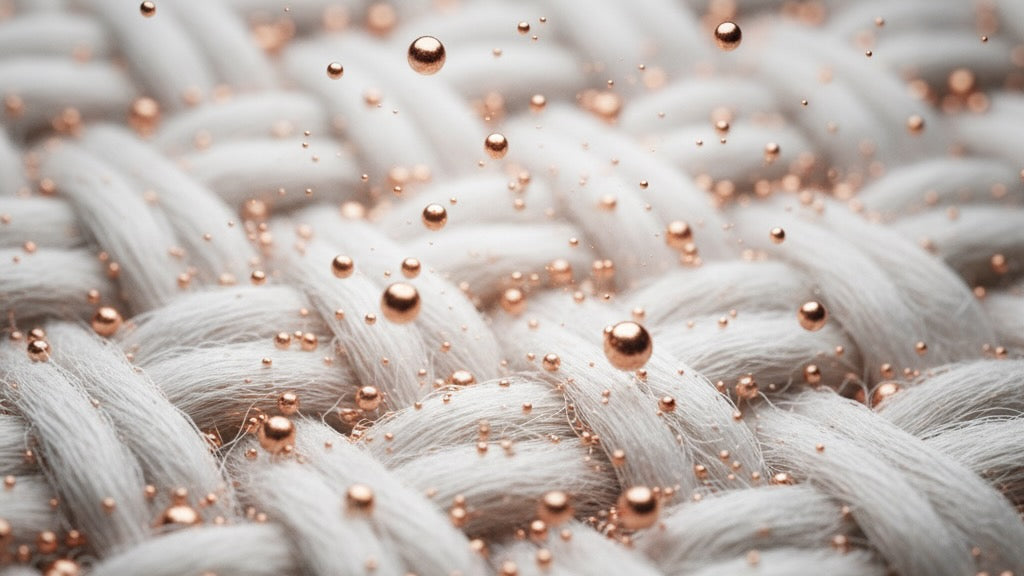
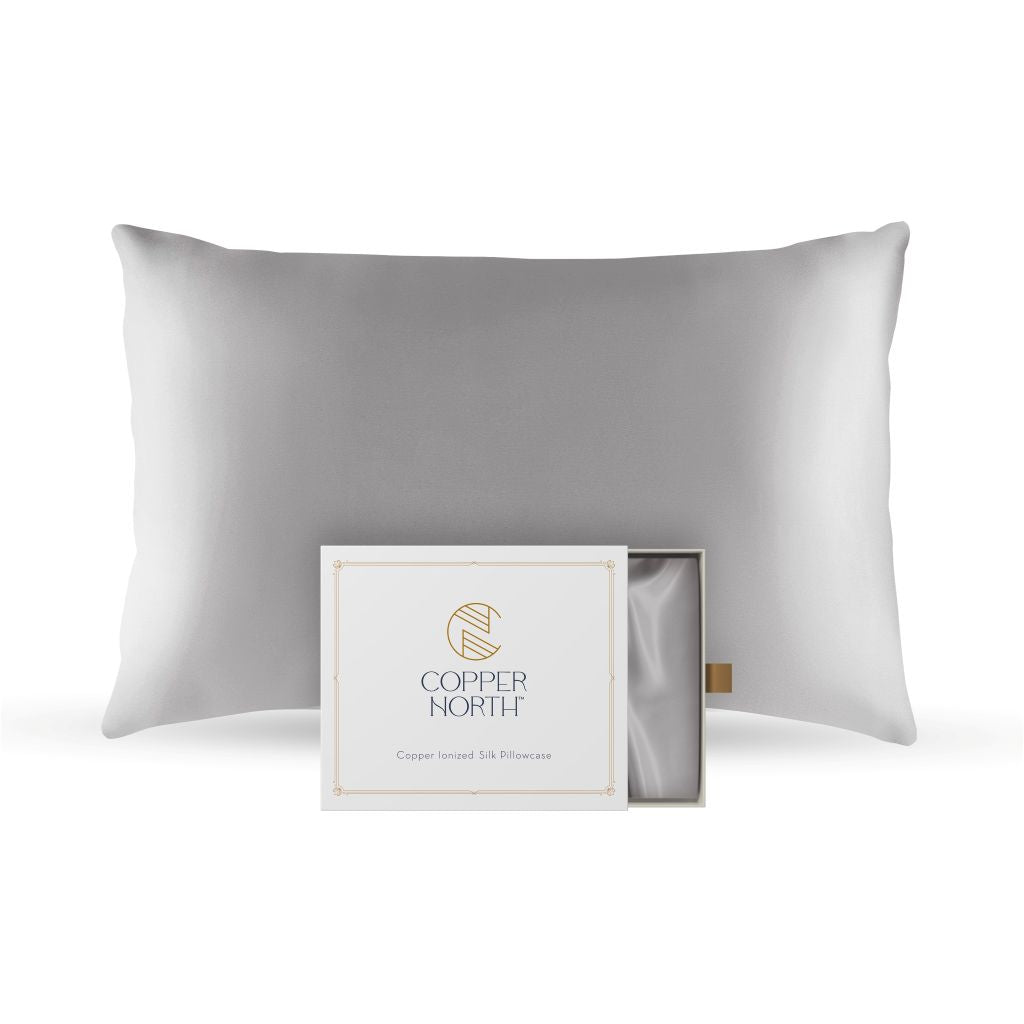
Some skeptical comments are largely directed at poorly made products: “polycopper” or copper-polyester blends that sacrifice silk's natural benefits, or claims that go further than the evidence supports. Copper North pillowcases are made from 100% mulberry silk, not a polyester blend, infused with copper ions and independently verified by European laboratories.
Furthermore, accessing copper’s skin benefits requires skin contact. People who are back-sleepers only - even if sleeping on a copper pillowcase - will necessarily see different results than people who rotate through the night, or are side- or belly-sleepers.
What does copper do in a pillowcase?
To understand whether a copper pillowcase works, you first need to understand what copper does in the body and what happens when it comes into contact with skin.
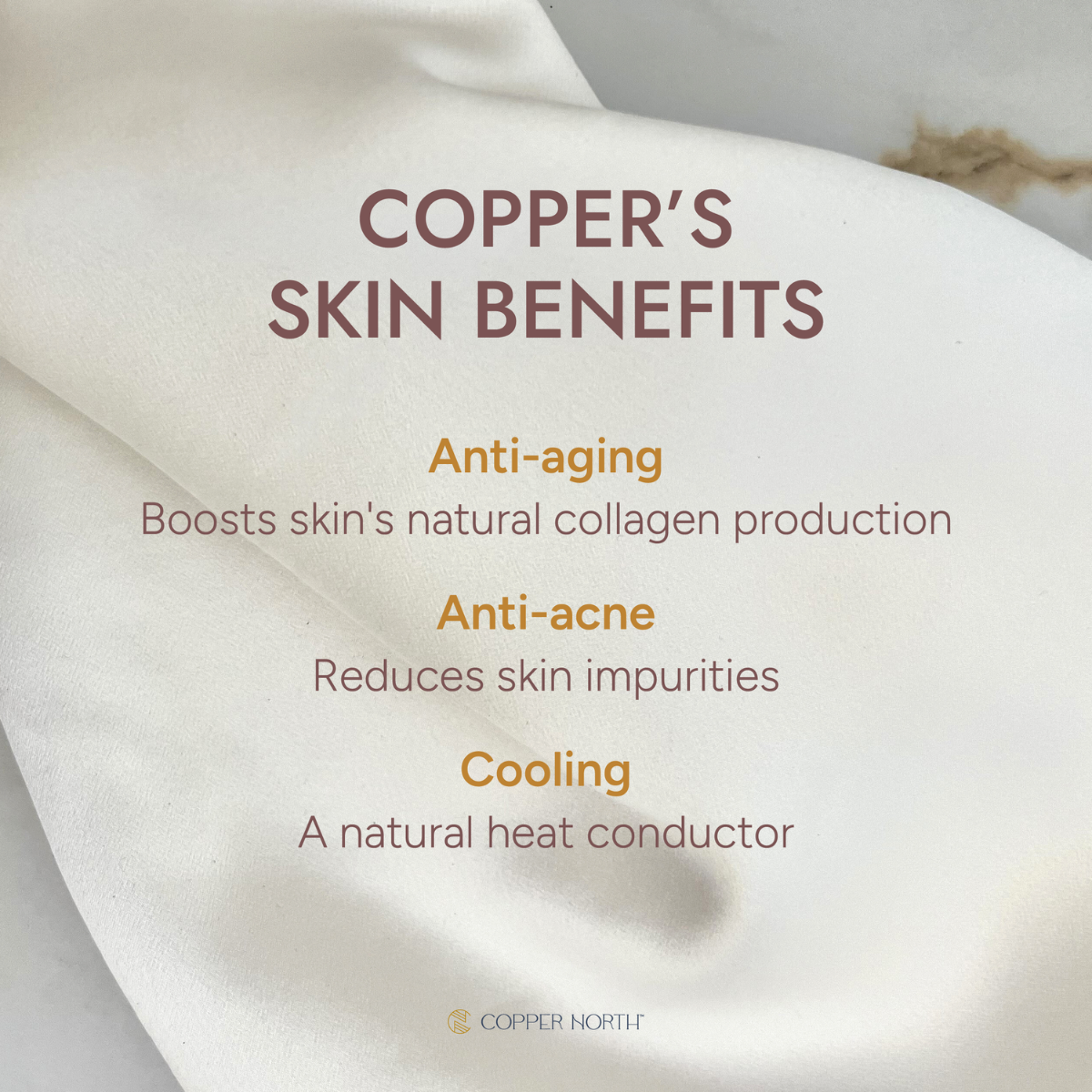
Copper's role in collagen production
Collagen is the structural protein that gives skin its firmness, elasticity, and smoothness. As we age, collagen production declines, leading to the wrinkles, sagging, and fine lines that a lot of people want to slow. The process of forming and stabilizing collagen fibers depends critically on an enzyme called lysyl oxidase.
Lysyl oxidase is a copper-dependent enzyme. Its job is to catalyze the cross-linking of collagen and elastin molecules in the extracellular matrix, essentially the step that locks collagen into its durable, structural form. Without adequate copper, lysyl oxidase cannot function properly, and the collagen framework that holds skin together weakens over time (1).
This relationship between copper and collagen synthesis is not new or controversial. It is a well-established mechanism documented in biochemistry textbooks and replicated across multiple laboratory studies (2,3). Copper also activates fibroblasts, the skin cells responsible for producing collagen and elastin, and upregulates the secretion of extracellular skin proteins (4).
Can copper be absorbed through skin contact?
The question relevant to pillowcases is whether copper from an infused fabric can actually reach the skin cells that use it. The answer is yes: copper can be absorbed through intact skin. This transdermal absorption is the mechanistic foundation for the clinical trials described below, and it is consistent with the established medical use of copper in wound dressings and therapeutic textiles (5).
It is worth reiterating though that copper is absorbed and absorbed best through direct skin contact. This means a copper pillowcase will have more benefit for side or belly sleepers, and people who rotate through the night, as opposed to people who are back-sleepers only.
What the clinical trials found
There are two key peer-reviewed clinical trials specifically testing copper oxide-infused pillowcases. Both were published in indexed dermatology journals. Here is what they found about copper pillowcase science, and what their limitations are.
Study 1: The 2009 randomized controlled trial
Published in the International Journal of Cosmetic Science, this double-blind, placebo-controlled, parallel, randomized study involved volunteers who slept on either copper oxide-containing pillowcases or identical control pillowcases without copper (6).
What they found: After four weeks of consistent nightly use, the copper pillowcase group showed statistically significant reductions in facial wrinkles (P < 0.001), crow's feet and fine lines (P < 0.001), and significant improvement in overall skin appearance (P < 0.001) compared to the control group. In most participants, these changes were already visible at the two-week assessment (7).
Study design note: This study used a 1% copper oxide by weight concentration in the pillowcase fabric. It ran for four weeks. Both the expert dermatologist graders and objective imaging measures confirmed the results.
Study 2: The 2012 double-blind randomized clinical trial
A subsequent study published in the Journal of Cosmetic Dermatology extended the methodology to eight weeks and included a larger participant pool of healthy volunteers aged 30–60. Participants were again randomized to copper oxide-containing or control pillowcases, with skin condition evaluated by two expert graders and 3D imaging analysis at baseline, four weeks, and eight weeks (8).
What they found: Sleeping on copper oxide-containing pillowcases resulted in statistically significant reduction in wrinkle depth and overall improvement in skin appearance over eight weeks, compared to the control group (9).
A companion ex vivo study that examined the mechanism confirmed that copper ions exposed to human skin explants increased the expression of pro-collagen 1, elastin, and TGF-β1, exactly the proteins responsible for skin firmness and elasticity (10).
What these studies don't prove: Both studies were conducted on copper oxide-infused pillowcases compared to plain pillowcases, not specifically against pure silk pillowcases without copper. So while the studies confirm that copper adds measurable benefit over a non-copper control, they don't quantify exactly how much of the benefit comes specifically from copper versus the underlying fabric. This is a limitation that honest reporting requires acknowledging.
A bonus review across multiple copper-infused textile studies
A broader 2014 review published in Current Chemical Biology surveyed multiple double-blind placebo-controlled trials of copper-infused textiles, including pillowcases, and concluded that consistent exposure to copper-embedded textiles significantly reduced facial wrinkles and skin sagging and enhanced skin elasticity (11).
The antimicrobial case: Copper's impact on skin bacteria
Beyond collagen and anti-aging, copper's antimicrobial properties are among the most extensively documented in materials science and medical research.
Copper ions disrupt bacterial cell membranes on contact, a mechanism that functions against a broad spectrum of bacteria including Staphylococcus aureus, Escherichia coli, and other pathogens commonly associated with skin inflammation and acne (12). This is not a new application: copper has been used in hospital textiles, wound dressings, and antimicrobial surfaces in clinical settings for decades, where infection control is the primary goal (13,14,15).
For skin, the relevance is direct. A cotton pillowcase accumulates bacteria, oils, and dead skin cells through the night, and that surface can be in contact with the face for seven to eight hours at a stretch. Copper's contact-kill mechanism means a copper-infused pillowcase can actively reduce the bacterial load on the sleep surface. For people with acne-prone or sensitive skin, this is potentially significant, though the direct clinical evidence linking copper pillowcase use specifically to acne reduction in a rigorous trial is thinner than the wrinkle evidence. Board-certified dermatologists cited in health reporting have noted that copper's antimicrobial effect can help keep bacterial counts low, and that acne-prone users have reported improvement, but that individual results vary (16,17).
The silk layer: Why fabric composition matters
The copper pillowcase benefit doesn't exist in a vacuum. What the copper is infused into matters enormously and this is where product quality diverges sharply in the market.
Several copper pillowcases available online are made from copper-polyester blends: some are called “polycopper”, some have silk comprising only half of the fabric weight, with the remainder being synthetic polyester. Polyester does not share the properties that make silk genuinely beneficial for skin and hair, and blends sacrifice many of silk's functional advantages in the service of making copper infusion easier to manufacture.
Pure mulberry silk, the kind used in Copper North pillowcases, provides its own independently documented benefits:
Friction reduction:
Research from the Textile Research Institute (TRI Princeton) confirmed lower friction between silk and hair compared to cotton, with silk allowing hair to glide rather than snag. Separate laboratory testing has demonstrated that silk pillowcases reduce hair-damaging friction significantly compared to cotton (18). For skin, lower friction means fewer sleep creases and less mechanical stress on facial tissue over time.
Moisture retention:
Silk absorbs less moisture than cotton, which absorbs moisture quickly and can draw hydration away from skin and hair overnight. This matters for anyone applying serums or moisturizers before bed: cotton can absorb those products away from your skin; silk does not.
Hypoallergenic properties:
Mulberry silk is naturally resistant to dust mites, mold, and common allergens, a benefit that is particularly relevant for sensitive or reactive skin.
Thermal regulation:
Silk naturally regulates temperature, keeping the sleep surface cooler than synthetic alternatives (19). For people who sleep hot or experience night sweats, this is a meaningful comfort benefit with secondary implications for skin hydration.
When copper infusion is applied to 100% mulberry silk rather than a polyester blend, both sets of benefits are preserved. The silk does what silk does; the copper does what copper does. That combination, not copper alone nor silk alone, is what Copper North pillowcases and eye masks are designed to deliver.
Want to know exactly how copper is infused into fabric without compromising the integrity of the silk? Read our detailed explainer on the copper infusion process.
The honest caveats
We would rather give you an accurate picture than oversell, because the science is genuinely compelling without exaggeration.
Results take time. The clinical studies showed meaningful changes at two weeks, with more significant improvement at four and eight weeks. A copper pillowcase is not a serum you apply and see results from overnight. If you switch to one, use it consistently for at least four weeks before evaluating whether it is working for you.
It is not a replacement for skincare. A copper pillowcase is most accurately understood as an addition to, not a substitute for, a good skincare routine. It works while you sleep, passively, over many hours of contact. It does not replace sunscreen, retinoids, or a dermatologist's advice.
Not suitable for people with copper allergies. Copper allergies are rare, but they do exist. If you have a known sensitivity to copper, this product is not appropriate for you.
The research base is compelling but limited in scale. The clinical trials cited are rigorous in design - double-blind, placebo-controlled, randomized - but they involve relatively small sample sizes. Larger independent trials would strengthen the evidence base further. The science is promising and consistent, but it is not the same scale of evidence as, say, a large pharmaceutical trial.
How to evaluate any copper pillowcase (not just ours)
If you are determining if a copper-infused silk pillowcase is worth it, from Copper North or anyone else, here are the questions to ask:
What is the fabric composition? Look for 100% mulberry silk. If the listing says "copper polyester", “polycopper”, "viscose", or gives a blended ratio (e.g., 51% silk / 49% copper polyester), you are not getting a pure silk pillowcase. The benefits of silk as described above require actual silk.
What is the momme weight? Momme (pronounced "moh-may") is the quality measure for silk, analogous to thread count for cotton, but more meaningful. Lower momme means thinner, less durable fabric. A quality silk pillowcase should be 19–25 momme. Copper North pillowcases are 22 momme. Below 19 momme, the fabric is thinner and will wear faster.
What is the copper infusion method? This affects both the efficacy and the durability of the copper benefit. It also influences the which type of surface you're spending 7-8 hours sleeping on. We explain our (and all other types of) infusion process in detail here.
Frequently asked questions
Does a copper pillowcase really help with acne? Copper's antimicrobial properties are well-documented and reduce bacterial load on the sleep surface. Users with acne-prone or sensitive skin frequently report improvement. However, the direct clinical evidence for copper pillowcases specifically reducing acne in a controlled trial is less robust than wrinkle reduction or skin elasticity evidence. Think of it as a supportive measure alongside your existing skin care, not a standalone acne treatment.
How long before I see results from a copper pillowcase? The clinical trials showed statistically significant skin improvement beginning at two weeks of consistent use, with greater improvement at four and eight weeks. Give it at least a month of nightly use before drawing conclusions. Note, results will depend on what type of sleeper you are, e.g., a belly sleeper vs a back sleeper.
Is there a difference between copper polyester and copper silk pillowcases? Yes, a significant one. Polyester does not share the friction-reducing, moisture-moderating, temperature-regulating, and hypoallergenic properties of mulberry silk. A copper-polyester blend may deliver some antimicrobial benefit from the copper, but lacks the full complement of silk's skin and hair benefits. We only use 100% mulberry silk.
Can I wash a copper pillowcase and keep the copper benefit? Yes, when washed correctly. Use cool water, hand wash or use the gentle cycle, and always use a silk-safe detergent. See our complete silk care guide.
Is 22 momme the best weight for a silk pillowcase? 22 momme is widely considered the benchmark for a balance of luxury feel, durability, and functional benefit. Heavier momme (e.g., 25mm) is denser and more durable; lighter momme (e.g., 16mm) is thinner and less durable. For a pillowcase used nightly, 22 momme is the quality standard we recommend.
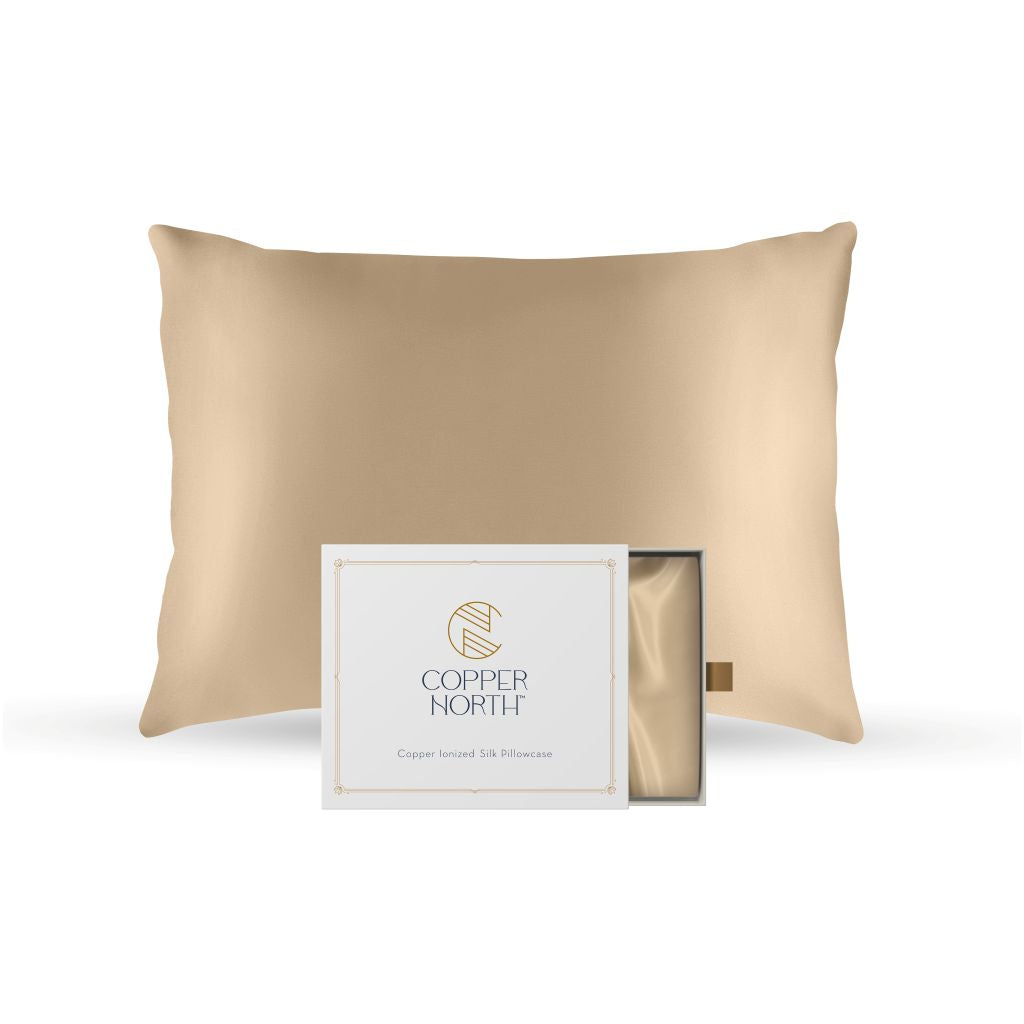
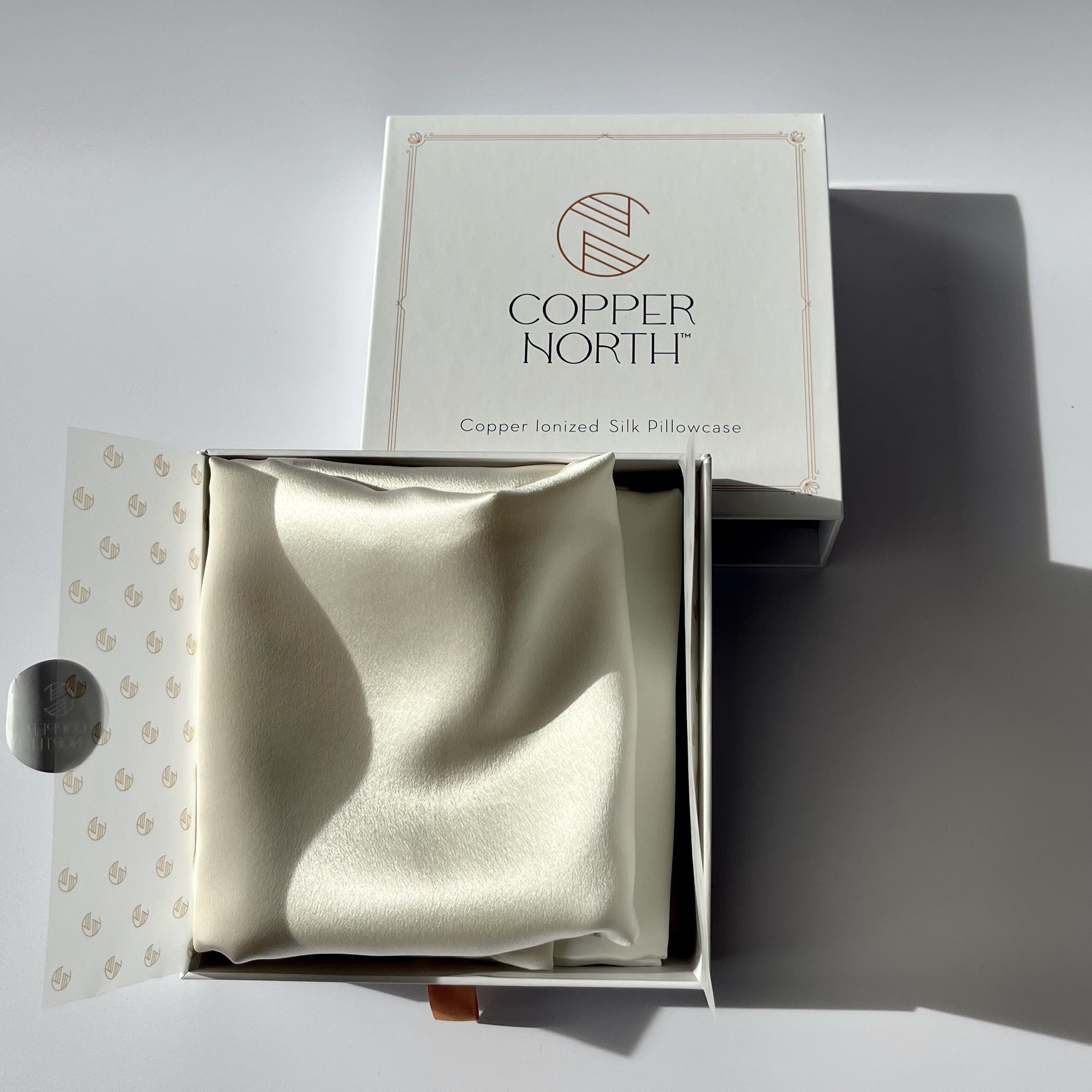
What makes Copper North different from other copper pillowcases? Three things: 100% mulberry silk (not a polyester blend), independent European laboratory testing of copper content, and OEKO-Tex Standard 100 certification. We also make our pillowcases in a range of sizes with an envelope closure so they stay put through the night. And we make sure the unboxing experience is as special as your pillowcase, because all parts of sleep should be indulgent.
The bottom line
Copper pillowcases work, when they are made properly. The clinical evidence for copper's role in reducing facial wrinkles and fine lines is the product of rigorous double-blind, placebo-controlled trials published in peer-reviewed dermatology journals. The antimicrobial mechanism is established across a much broader body of biomedical literature. And the benefits of pure mulberry silk - friction reduction, moisture retention, thermal regulation - are independently documented in textile research.
The cynicism some people bring to this category is understandable, because not all products deserve the claims they make. Cheap copper-polyester blends, unsupported marketing language, and inflated promises have clouded a category where the underlying science is genuinely compelling.
Our customers find that copper infused pillowcases are worth it because they, like us, find the evidence is strong. Copper pillowcase benefits are only attainable though when the materials and process are right. If you have questions about the science or our process, we welcome them →.
Explore more from our The Art and The Science libraries
On this topic:
- How copper infusion works: the process behind copper-infused silk
- Silk vs. cotton bedding: a science-backed guide to sleeping
- Natural fiber vs. synthetic bedding: What really matters for sleep?
Related reading:
- What is momme and why it matters in silk quality
- How to wash copper-infused silk
- Copper and anti-aging: How this mineral supports skin rejuvenation
References
- Rucker, R.B., et al. (1998). “Copper, lysyl oxidase, and extracellular matrix protein cross-linking”. American Journal of Clinical Nutrition. 67(5 Suppl):996S–1002S. Link
- Harris, E.D., et al. (1980). “Copper and the synthesis of elastin and collagen.” Biological Roles of Copper, Ciba Foundation Symposium 79, Novartis Foundation Symposia Book Series. 10.1002/9780470720622.ch9. Link
- Myllyharju, J., et al. (2001). “Collagens and collagen-related diseases.” Annals of Medicine. 2001;33(1):7–21. Link
- Borkow, G. (2014). “Using copper to improve the well-being of the skin”. Current Chemical Biology. 2014;8(2):89–102. Link
- Ibid.
- Borkow, G., et al. (2009). “Improvement of facial skin characteristics using copper oxide-containing pillowcases: a double-blind, placebo-controlled, parallel, randomized study”. International Journal of Cosmetic Science. 31(6):437–443. Link
- Ibid.
- Baek, J., et al. (2012). “Reduction of facial wrinkles depth by sleeping on copper oxide-containing pillowcases: a double blind, placebo controlled, parallel, randomized clinical study.” Journal of Cosmetic Dermatology. 2012 Sep;11(3):193-200. doi: 10.1111/j.1473-2165.2012.00624.x. Link
- Ibid.
- Borkow, G. (2014).
- Ibid.
- Grass, G., et al. (2010). “Metallic Copper as an Antimicrobial Surface.” Applied and Environmental Microbiology. 77(5):1541–1547. Link
- Butler, J. P. (2018). “Effect of copper-impregnated composite bed linens and patient gowns on healthcare-associated infection rates in six hospitals.” Journal of Hospital Infections. 100(3):e130-e134. Link
- Borkow, G. (2010). “Copper oxide impregnated wound dressing: biocidal and safety studies.” Wounds. 22(12):301-10. Link
- Grass, G., et al. (2010).
- Stephens, T.J., et al. (2015). “Pilot Study of Topical Copper Chlorophyllin Complex in Subjects With Facial Acne and Large Pores”. Journal of Drugs in Dermatology. 14(6):589-92. Link
- Badger, M. (2025). “Copper Peptides Can Firm And Lift With No Irritation. Here's What You Need To Know, According To Dermatologists”. Women’s Health. Accessed April 5, 2026. Link
- TRI Princeton. (2025). “Everyone is Talking About: Silk Pillowcases.” TRI Academy. Accessed Jan 23, 2026. Link
- Tang, K. (2025). “Advances in Thermoregulating Textiles: Materials, Mechanisms, and Applications”. Textiles. 5(2), 22. Link
Copper North pillowcases are made from 100% mulberry silk infused with copper and are OEKO-Tex Standard 100 certified. Our fabric composition and copper content are verified by independent European laboratories. These products are not intended to diagnose, treat, cure, or prevent any disease. Individual results may vary.





Share: